
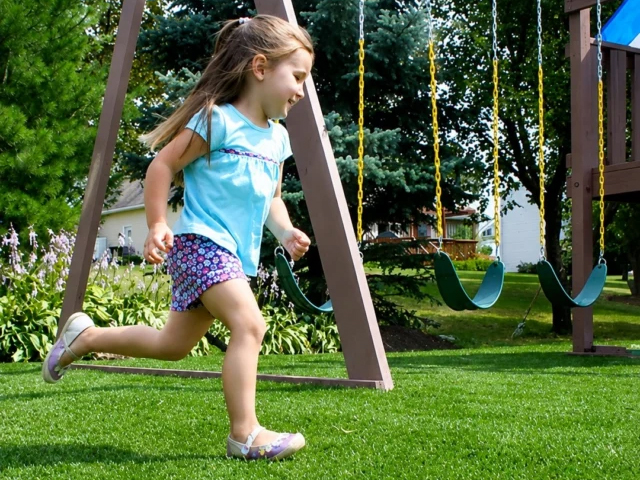
Are you looking to install a new playground surface in Connecticut? Safety is likely a top priority however, it should not be the only consideration. Schools, daycare facilities, churches, HOAs, and even homeowners should also consider other factors like accessibility, cleanliness, maintenance, and durability.
This is one reason why artificial grass has become such an appealing choice for playground surfaces. When installed correctly, playground turf can create a cleaner area, better accessibility, and stronger long-term performance.
Why Playground Turf Makes Sense
The climate in New York and Connecticut can mean harsh conditions for any playground. Spring brings plenty of rain, summer means heat and heavy use, and winter sees repeated freezing and thawing.
Real grass often struggles in playgrounds, especially under swings, slides, climbing structures, and other high-use areas. Those spots can wear down quickly, turn patchy, and become muddy after rain.
Loose-fill materials come with a different set of issues. They can shift out of place, scatter across the play area, and get tracked indoors. For schools and daycare facilities, that can mean more cleanup and more day-to-day maintenance.
The Big Benefits of Artificial Grass for Playgrounds
A cleaner play area
One of the best parts of artificial playground turf is how much cleaner the space can stay. Loose mulch, dirt, and other organic materials have a way of ending up on shoes, clothing, and inside nearby buildings. Artificial grass helps cut down on that mess and makes the area easier to keep neat.
Better accessibility
Artificial turf means a more accessible surface for wheelchairs, crutches, and strollers, compared to some types of loose-fill materials. That can make a big difference for schools, churches, municipalities, and community spaces that wish to improve the usability and inclusivity of the play area.
Fall protection
With safety surfacing, you have to consider the whole system. Most playground turf systems come with a cushioning underlayment, giving the surface impact absorption. This gives artificial playground turf reliable safety performance without many of the maintenance challenges associated with loose-fill surfacing materials.
A more finished look
Playground turf adds to the appearance of the play area. The consistent green appearance helps playgrounds look clean, inviting, and well-maintained year-round.
Less movement than loose-fill materials
Artificial grass stays in place better than loose-fill surfaces like mulch or wood chips. That means less time spent raking material back into place and fewer bare spots showing up in the areas kids use most.
Materials that Make up the Playground Turf System
When most people think about playground turf, they picture the grass itself. However, the system includes several other materials besides the top turf layer.
Turf layer
The turf layer is the visible surface of the playground system. Turf layers used for playgrounds are designed to hold up to heavy use while giving the surface a soft, natural look.
The cushion layer
The cushion layer sits beneath the turf and plays a major role in the overall safety of the playground surface. Made from impact-absorbing materials, it helps soften falls and reduce the force of impact when children are playing.
Infill
Infill is the material placed between the turf fibers to help support and stabilize the surface. It helps the turf blades remain upright, improves durability, and creates a more consistent surface across the playground.
Base layer underneath
The base layer forms the foundation of the entire playground turf system. Typically made from compacted stone or other aggregate materials, it creates a stable surface for the layers above while helping water drain away from the playground.
Why Installation Matters So Much
Installing playground turf involves more than simply laying down synthetic grass. The system must be designed to match the specific needs and use of the site.
That means looking at drainage, layout, equipment height, traffic patterns, and the safety needs of the space. Every site is different. A school, daycare center, and backyard play area each have their own needs and usage patterns.
A good-looking surface is not enough on its own. The system underneath it needs to support safety, drainage, and long-term performance.
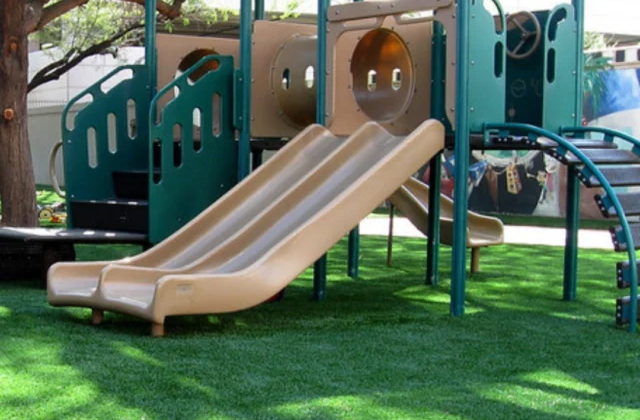
What Maintenance Does Playground Turf Need?
Artificial playground grass is lower-maintenance than many traditional options, but it is not maintenance-free.
Basic upkeep usually includes removing trash, clearing leaves, rinsing spills when needed, and keeping the surface clean. Over time, the area should also be checked for seam condition, edge condition, wear, drainage performance, and any spots that may need grooming or repair.
Artificial grass maintenance is still usually easier than dealing with muddy natural grass or constantly redistributing loose-fill material, but it does mean the surface should be cared for consistently.
Is Playground Turf Better Than Loose Fill?
The right surface depends on the space, the budget, and how the playground will be used, but there are good reasons many schools, daycare centers, and property owners choose playground turf over loose fill.
Loose-fill surfaces can work, but they tend to move around, need to be replenished, and can be harder to keep clean and accessible over time. Playground turf gives you a more even surface, a cleaner appearance, and less day-to-day mess. It also stays more consistent across the play area when the system is installed properly.
For many playgrounds in New York and Connecticut, the choice comes down to safety, appearance, accessibility, and upkeep. Turf is often a strong option because it performs well across all four.
Is Playground Turf Right for Every Project?
Each playground is unique, and factors such as the height of the equipment, budget, drainage, design, use, and goals for accessibility all factor into the decision about what surfacing to select. For schools, daycares, churches, HOA communities, municipalities, or individuals seeking a more aesthetically pleasing play space, synthetic turf is one of the best options.
Ultimately, it is essential to consider a playground product designed specifically for the unique conditions of that project and not one meant for the standard lawn.
Why Playground Turf Can Be a Smart Long-Term Choice
Artificial grass for playgrounds can offer a lot: a cleaner play area, better accessibility, a more polished appearance, and strong long-term performance when the right system is used. The materials matter. The installation matters. Maintenance still matters too. But when the project is planned well, playground turf can be a practical and attractive solution for high-use play spaces.
Need Help Planning a Playground Turf Project?
If you are considering artificial grass for a playground, the best place to start is with the right system for the space. Layout, drainage, accessibility, and safety all matter.
Contact us today, and we can help you choose a playground turf system that fits the way the area will be used.